
Celestial Gallery
Polaris: The North Star and a Cepheid Variable for Cosmic Distance Scaling

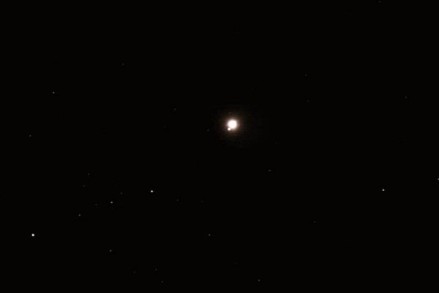
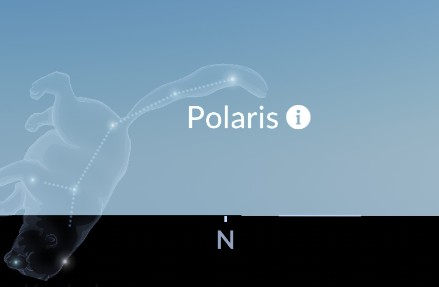
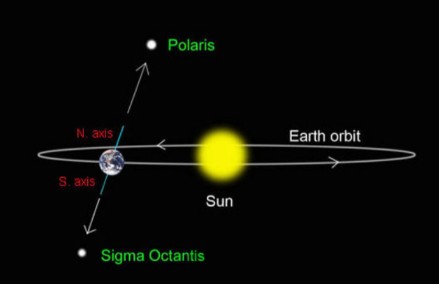
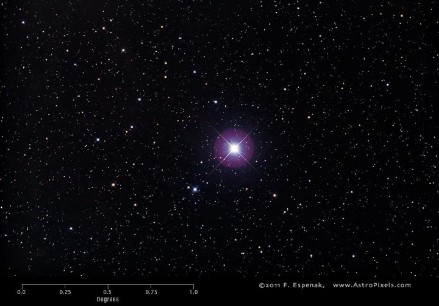
Polaris, commonly known as the North Star, is a multiple star system located approximately 430 light-years away in the constellation Ursa Minor. It lies very close to the north celestial pole, making it appear nearly fixed in the sky.
The primary component, Polaris A, is a yellow supergiant and a classical Cepheid variable. Its brightness varies periodically due to pulsations in its outer layers, making it a key object for measuring cosmic distances.
origin and Navigation

Polaris has been used for navigation for centuries due to its nearly fixed position in the northern sky. Ancient sailors and explorers relied on it to determine direction and latitude.
In modern astronomy, Polaris gained importance as a Cepheid variable, contributing to the calibration of the cosmic distance scale through the period–luminosity relation.
Stellar Structure and Pulsation
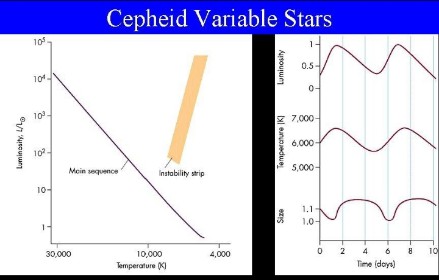
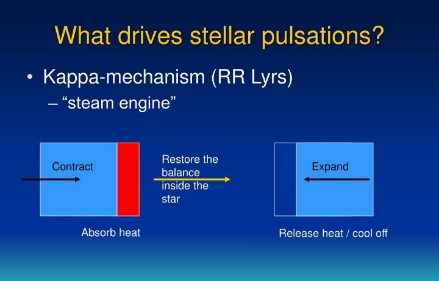
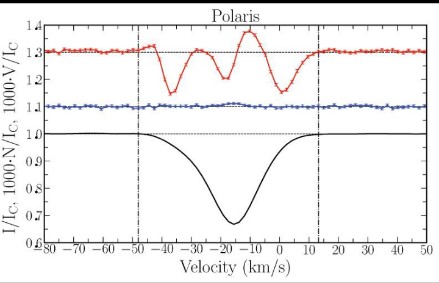
Polaris A is a post-main-sequence star that undergoes radial pulsations. These pulsations are driven by the κ-mechanism (kappa mechanism), where partial ionization of helium causes cyclic expansion and contraction.
- Type: Classical Cepheid variable
- Pulsation period: ~4 days
- Mechanism: opacity-driven (κ-mechanism)
The periodic change in radius and temperature leads to measurable brightness variations.
Distance Measurement Role
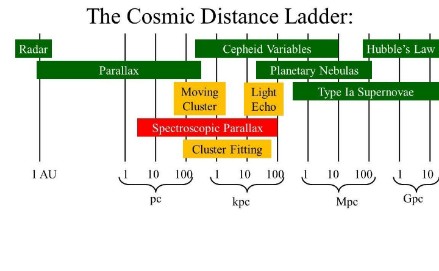
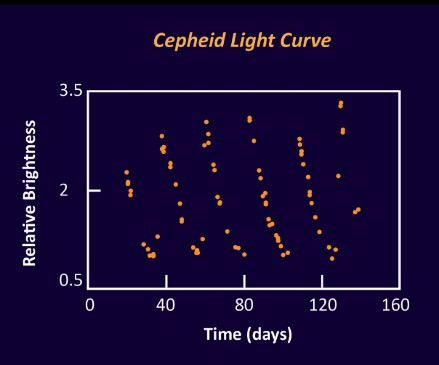
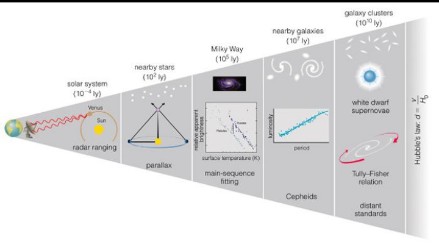
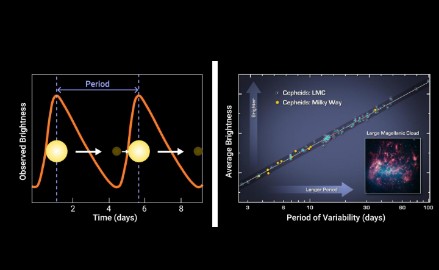
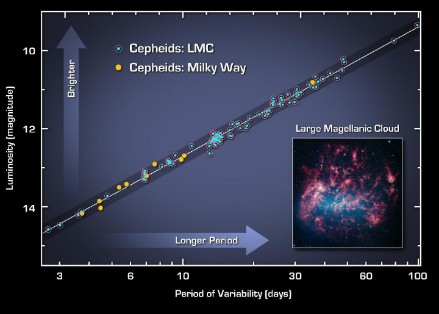
Cepheid variables like Polaris follow a well-defined period–luminosity relation, where the pulsation period is directly related to intrinsic luminosity.
By comparing intrinsic brightness with observed brightness, astronomers can determine distances to stars and galaxies, forming a fundamental step in the cosmic distance ladder.
Multiple Star System
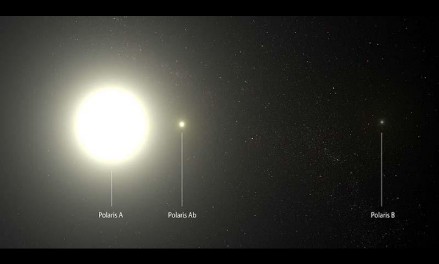
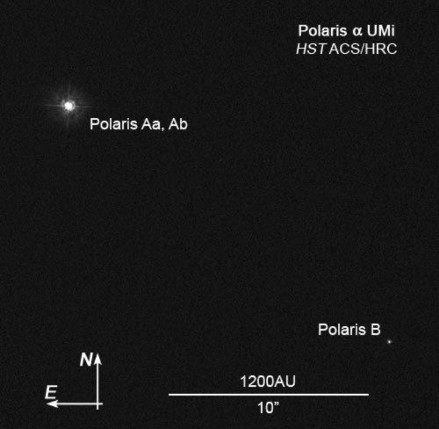
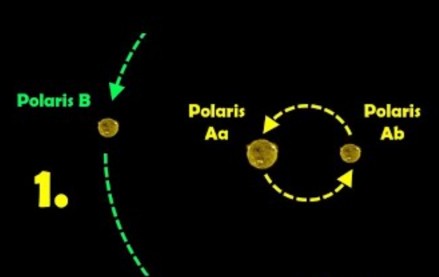
Polaris is not a single star but a multiple system consisting of:
- Polaris A: Cepheid supergiant
- Polaris Ab: close companion
- Polaris B: distant main-sequence companion
The gravitational interactions within this system provide insights into stellar evolution in binary and multiple systems.
Historical and Scientific Impact
- Primary reference for celestial navigation
- Calibration standard for Cepheid period–luminosity relation
- Key step in measuring distances to galaxies
- Bridge between observational astronomy and cosmology