
Celestial Gallery
The Sun: A Main-Sequence Star as a Laboratory for Stellar Physics
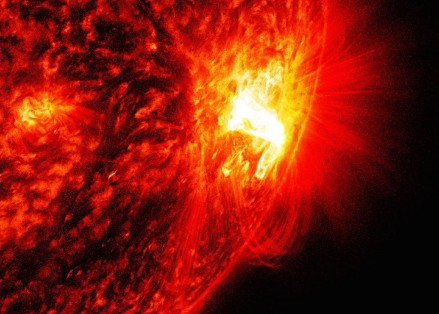
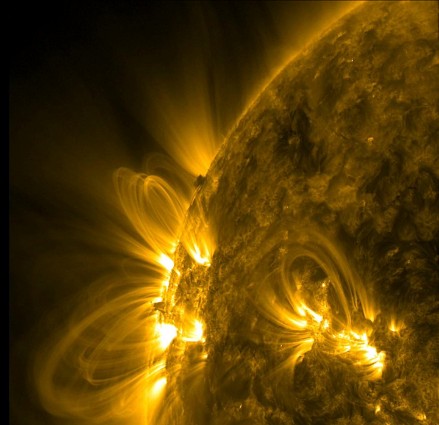
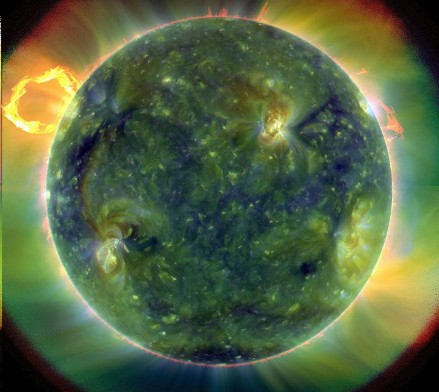
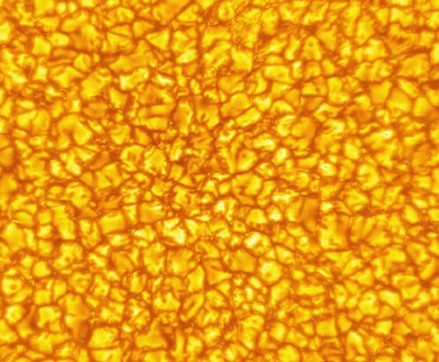
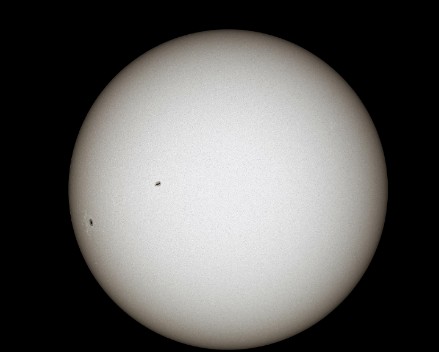
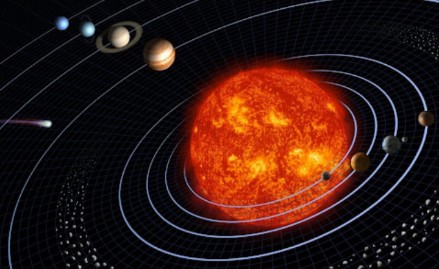
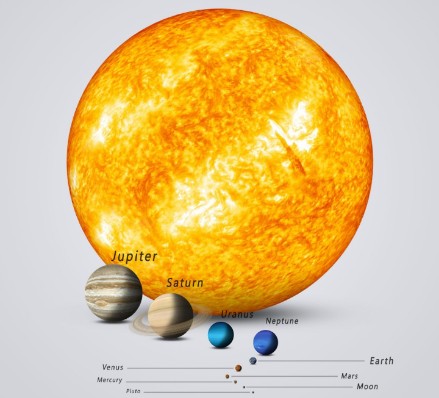
The Sun is a G2V located at the center of the Solar System, containing ~99.8% of its total mass. It has a mass of 1.989 × 10³⁰ kg and a radius of 6.96 × 10⁸ m. Its surface temperature (~5778 K) produces a continuous radiation spectrum. More details: NASA Solar Overview
Energy generation occurs through thermonuclear fusion in the core via the proton–proton chain, where hydrogen nuclei combine to form helium. This process converts mass into energy according to E = mc², producing a luminosity of ~3.828 × 10²⁶ W.

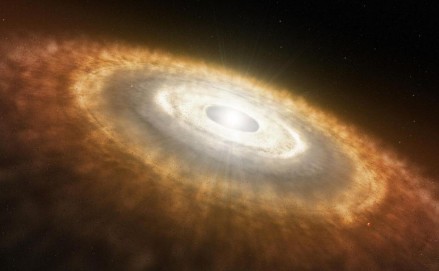
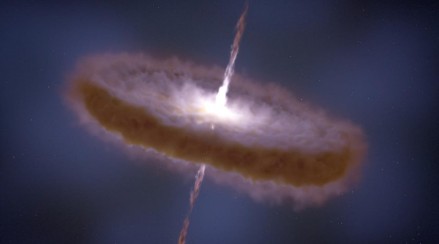
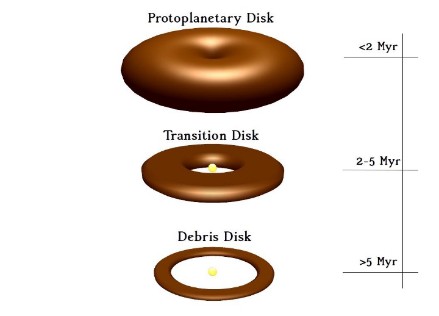
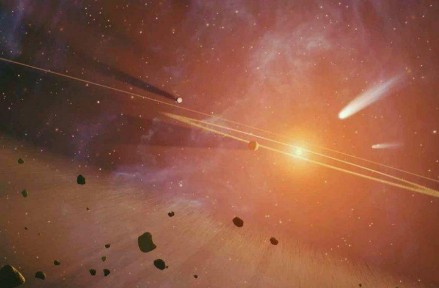
The Sun formed approximately 4.6 billion years ago from the gravitational collapse of a molecular cloud, forming a rotating protoplanetary disk .
It is currently in hydrostatic equilibrium, where inward gravity is balanced by outward radiation pressure. Over time, it will evolve into a RG and eventually a white dwarf .
Internal Structure and Fusion
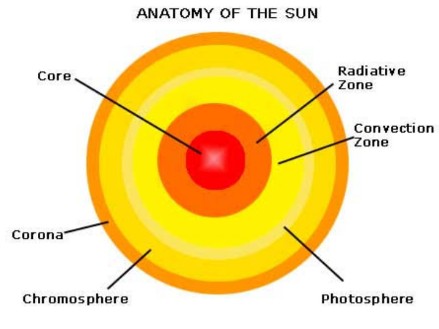
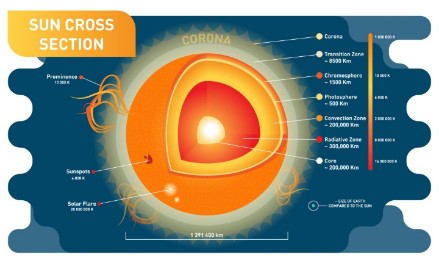
Fusion proceeds through reactions where four protons form one helium nucleus, releasing positrons, neutrinos, and gamma radiation.
Neutrinos escape almost instantly and are detected in experiments such as: Super-Kamiokande (Japan) , providing direct evidence of core processes.
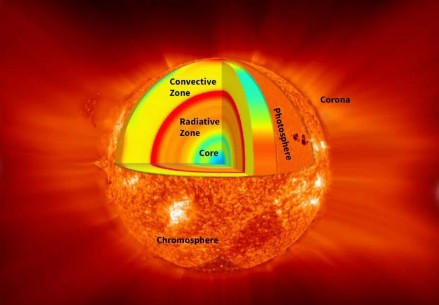
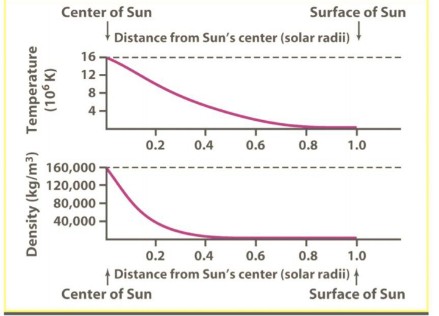
- Core (0–0.25 R☉): ~15 million K; fusion region
- Radiative zone: photons diffuse outward via scattering
- Convective zone: energy transported by plasma convection
- Photosphere: visible surface (~5800 K)
- Chromosphere and corona: outer atmosphere; corona reaches >1 million K
The dominant reaction chain is:
4p → He + 2e+ + 2νe + γ
Energy Transport
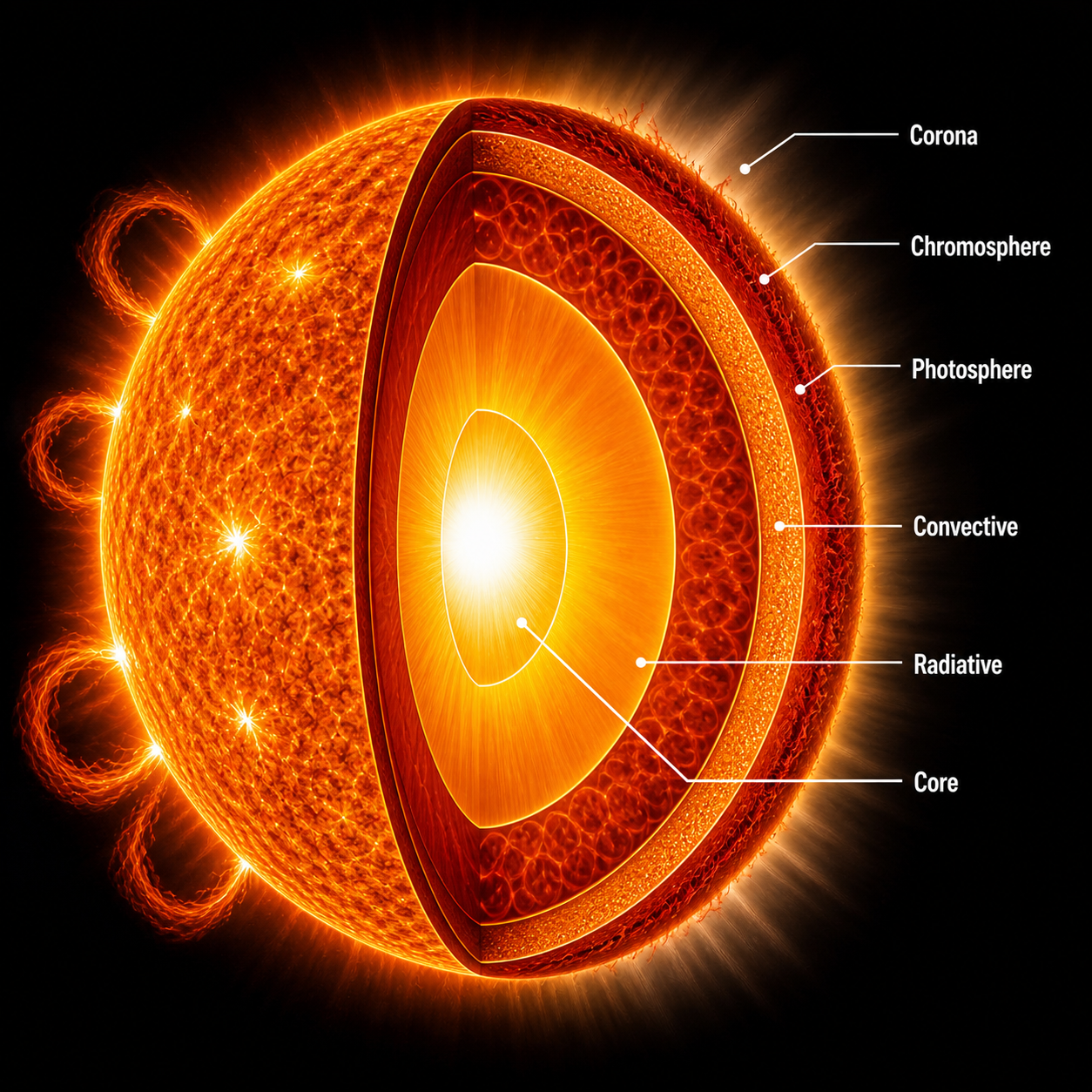
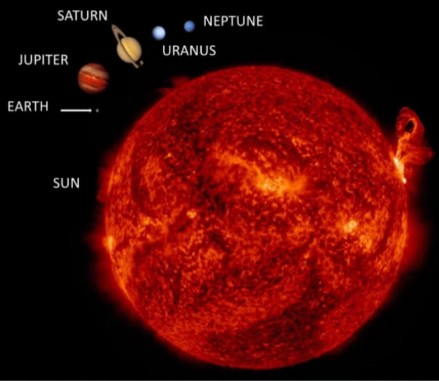
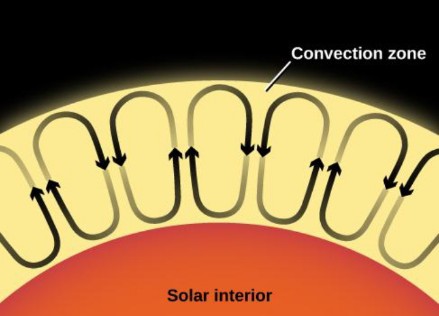
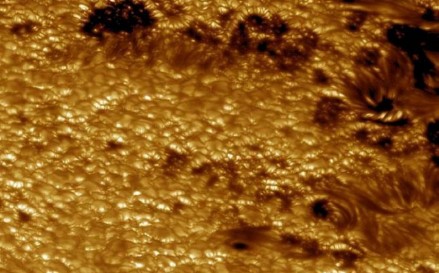
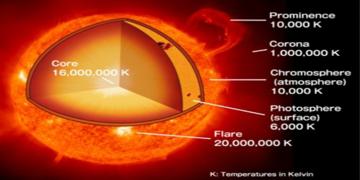
Energy moves through the Sun via radiative transfer and convection.
In the radiative zone, photons undergo a random walk, taking 10⁵–10⁶ years to reach the surface. In the convective zone, plasma motion produces granulation patterns.
Reference: ESA Solar Physics
Magnetic Field and Solar Cycle
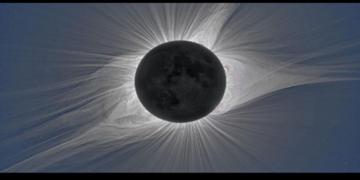
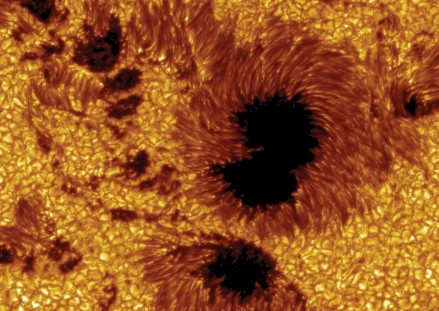
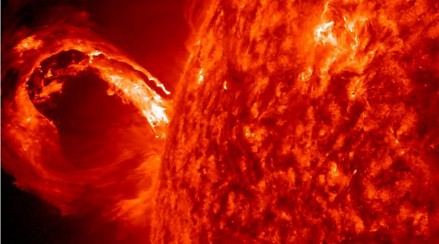
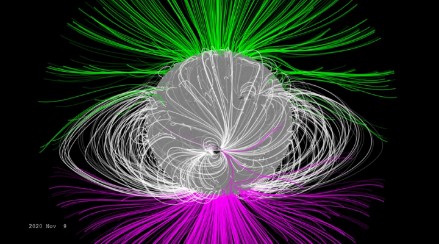
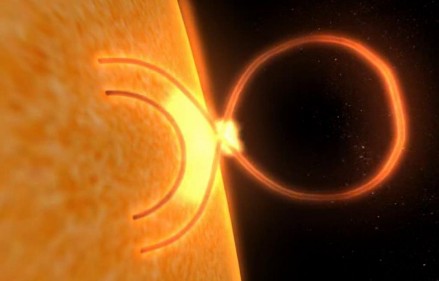
The solar magnetic field is generated by a dynamo mechanism driven by differential rotation and convection.
Magnetic reconnection releases energy in solar flares and coronal mass ejections (CMEs), affecting satellites and power systems.
Study missions: NASA Parker Solar Probe
Helioseismology
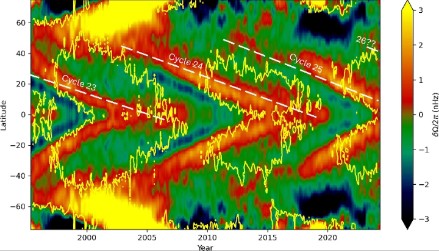
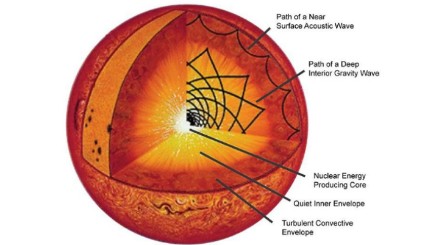
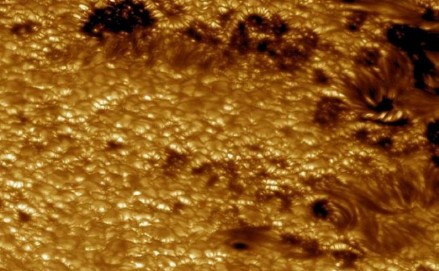
Helioseismology analyzes pressure waves (p-modes) inside the Sun to reconstruct its internal structure.
These oscillations validate models of stellar interiors and energy transport with high precision.
Reference: Harvard ADS (Astrophysical Data System)
Historical and Scientific Impact
- Fusion confirmed as the energy source of stars
- Validation of E = mc²
- Foundation of stellar evolution theory
- Benchmark for MHD studies
- Critical role in space weather research